Why Effective Leaders Should Look for the Planes that Didn't Land

During World War II, a mathematician named Abraham Wald was handed what looked like a straightforward problem. Military analysts had mapped bullet holes on returning aircraft. The wings and fuselage were riddled. The engines? Strangely clean.
The logical conclusion: reinforce the wings and fuselage. But Wald disagreed.
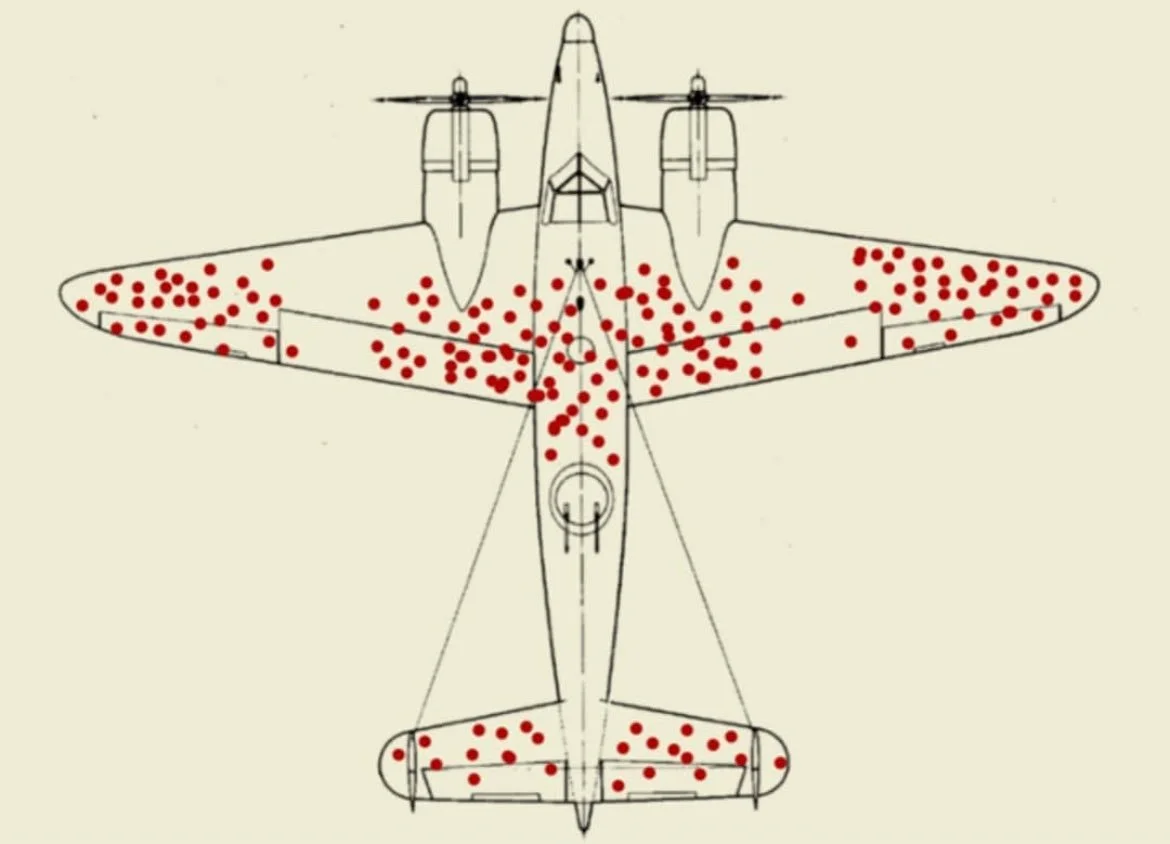
Military analysts originally proposed adding armor to the heavily damaged areas shown by the dots.
He pointed out they were only studying the planes that made it back. The ones hit in the engines weren’t on the runway; they were either in a Dutch field or at the bottom of the sea. The missing data wasn’t a rounding error.
It was, in fact, the whole story.
It’s one of the greatest lessons ever wrapped in aluminum and hindsight.
As leaders, we love dashboards. Heat maps. KPIs. Beautiful PowerPoint slides with more colors than a Haribo factory. But we’re often analyzing the “planes that returned.” The employees who stayed. The projects that survived. The customers who didn’t churn. How many times have we looked at data and then heard "oh, we don't have the data for Europe, so this is just North America and Asia (with a "GLOBAL" title as the header).
So what about the customers that DID churn, or the employees that DIDN'T stay? Exit interviews rarely get prime-time airtime. Failed project-pilots get quietly archived.
The quiet high performer who left without drama? That’s your engine hit.
Missing data is seductive because it doesn’t argue with you. It doesn’t show up in meetings. It doesn’t make noise. It just disappears, straight into your blind spot.
Survivorship bias shows up everywhere:
“Our strategy works — just look at these (three) success stories.”
“This transformation is great — the (loudest) voices support it.”
“Our culture is strong — nobody’s complaining.” (Yes, because the complainers may have already left.)
The leadership edge isn’t in analyzing what’s visible. It’s in asking "Who isn’t here? What aren’t we seeing? Where are the clean engine parts?" Wald didn’t just save airplanes. He saved leaders from confusing visible evidence with complete evidence.
So next time your metrics look perfect, pause. Ask about the planes that didn’t land.
That’s where the real intelligence lives.