When the Leader Jumps First!
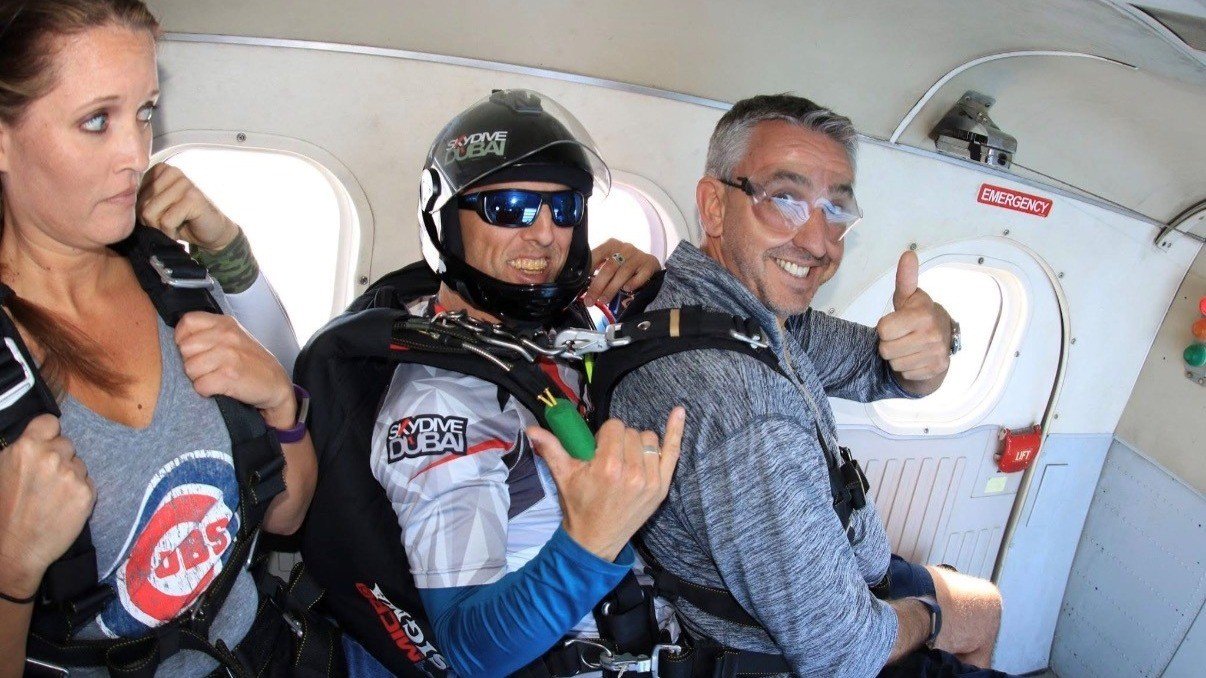
Dubai 2017 and the (now) wife really not sure about my great idea!
When we were dating, I "suggested" to my (now) wife that we should take a freefall parachute jump over The Palms, in Dubai. As you can see from our photo, she would be self-proclaimed "risk averse". So yes, I had to go first. Leadership books love to talk about courage, but they rarely mention the awkward moment when everyone stares at the leader and silently asks, “You first… and we’ll watch.” The truth is, sometimes the leader really does have to be the one willing to take the risk — to step out of the plane while the rest of the team checks whether the parachutes are real or just part of the metaphor.
Teams don’t take risks because a slide deck told them to. They take risks because they see someone else jump and land in roughly the right field. When a leader backs an unproven idea, defends a bold decision, or admits uncertainty without immediately blaming the weather, it sends a powerful signal...... "this is survivable". Ideally, the leader pulls the ripcord and doesn’t disappear into the clouds of “organizational restructuring.”
Of course, leadership risk-taking isn’t about reckless freefall. It’s not leaping out at 12,000 feet yelling “innovation!” and hoping gravity sorts out the details. (this doesn't work as an FYI). The real work happens in the preparation in calmly explaining why the leap made sense, where the parachute came from, and reassuring everyone that spare chutes exist, and if you're strapped to someone then they do this 10 times a day and are still alive. People need to know the risks are minimized, but when they do exist then the leader is ready to jump first.
Great leaders also talk openly about what happens if the parachute doesn’t open perfectly. They normalize wobbling landings, grassy bruises, back up safety measures, and the occasional faceplant. When leaders say, “If this fails, we’ll learn, repack, and jump again — no one’s career is being used as ballast,” teams relax. And relaxed teams take smarter risks.
Over time, something magical happens. The leader doesn’t have to jump first every time. The team starts stepping toward the door on their own. Risk becomes shared, confidence compounds, and innovation stops feeling like a once-a-year stunt jump.
In the end, leadership isn’t about being fearless. It’s about jumping first, landing visibly, and waving up at the team: “Parachutes work. Your turn.” And then they can give you that "you're crazy" look (like my wife continues to do to this day!) and follow you!